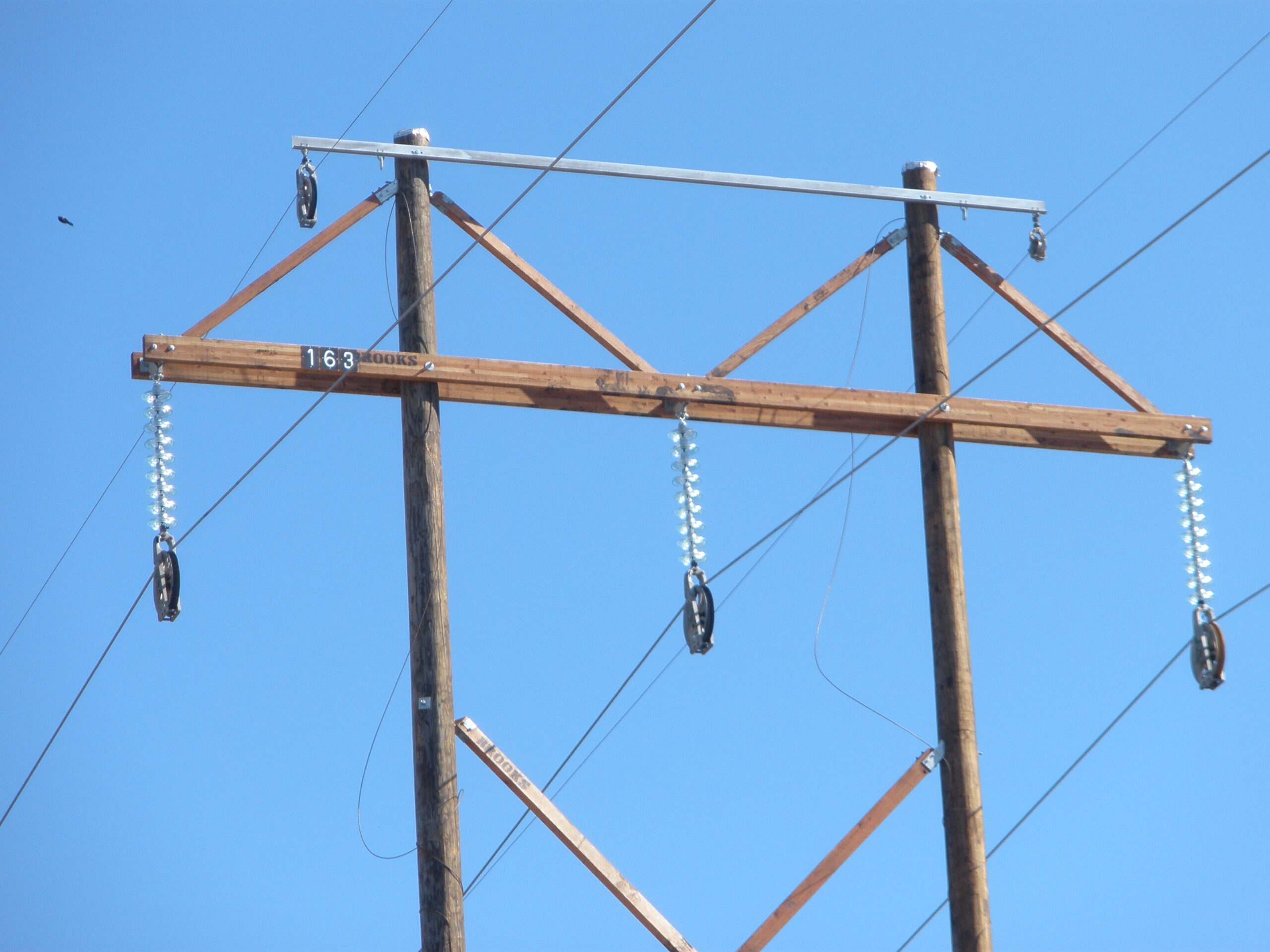
Independent study confirms durability of wood crossarms in wildfires
When the heat—and fire—was turned up on both wood crossarms and composite crossarms, wood proved the more reliable option.
In an independent study performed by Western Fire Center, Inc., in Kelso, Washington, wood crossarms from Brooks Manufacturing went head-to-head against composite crossarms, put through the same intense scrutiny that included the crossarms holding 300-pound weights on either side while an output of radiant heat and live fire inundated the arms.
Wood was the only material left standing.
Western Fire Center’s testing aimed to evaluate the effectiveness of loaded crossarms to withstand the effects of radiative and convective flames during a simulated fire event.
“The two fiberglass arms both collapsed during fire exposure,” according to the study, “and all wood types did not have structural collapse.”
The study process featured five minutes of intense radiant heat before live fire was introduced to the crossarms for an additional five minutes. The composite crossarms failed in the live fire portion of the study within two minutes, with both sides of the crossarm collapsing, one after less than a minute of live fire reaching it and the other side in less than two minutes. The wood crossarms, while sustaining charring, held the 300-pound weights throughout the radiant heat and live fire portion. Once the heat was turned off and the crossarms were left to continue burning or self-extinguish for the next 20 minutes, the wood crossarms continued to hold the weight.
An original study was recreated recently with updated composite materials, showing an even quicker failure rate of the fiberglass composite crossarm in fire testing. In the newest tests, some of the composite crossarms failed even before the live fire potion of the study started.
Recreating a wildfire event within a laboratory shows that as wildfires grow in frequency, especially within urban areas filled with utilities, wood crossarms perform better in wildfire episodes, providing greater utility grid reliability and offering a superior material choice for durability and sustainability.
Utilities and Ratepayers
For utilities and their ratepayers, wood crossarms have proven more reliable in keeping power lines in place, continuing to perform their intended function and keeping electricity flowing to customers.
Why Wood Crossarms Outperform Composite Crossarms
Part of the reason the Brooks Manufacturing wood crossarms outperformed composite in the study comes thanks to a biodegradable treatment added to the wood. The myth that wood crossarms burn more rapidly in a fire situation was quickly extinguished, as proven out in the Western Fire Center study. The nature of a wood crossarms allows a layer of char to form that protects inner fibers, retaining strength in the wood robust enough to hold the power lines.
In the most extreme wildfire cases, which can burn up to 2,200 degrees Fahrenheit, the temperature becomes so hot that all material, including composite and steel, will degrade quickly. As treated wood crossarms survive longer than any of the alternative materials in the study, claims of fire resistance don’t pan out for the composite and fiberglass makers of crossarms.
When Composite Fiberglass Crossarms Fail
In the case of a fire, when composite fiberglass crossarms fail, they not only undo the reliability of the power grid, but can drop live wires, sparking additional fires. The lack of durability of the expensive equipment doesn’t bear out the cost of choosing composites, based on the study’s information. The question, then, comes back to why are utilities paying three times as much for a product that will not survive?
While composite crossarm manufacturers may claim durability during a fire, there’s no research backing the claims of self-extinguishing properties in the heat of a real-world fires. According to the industry’s own research from the Center for Integration of Composites into Infrastructure, fiber-reinformed polymer poles lose 25 percent of their strength when exposed to high temperatures for less than 30 seconds. With layers of fiberglass composite peeling away in intense heat, composite poles and crossarms fail within minutes of a severe fire exposure.
To combat the growing risk from unmitigated wildfires and the threat posed against utility grids, treated wood crossarms have proven more durable than composite counterparts in grid reliability. Wood crossarms simply stand up to the dangers of fire better than composite materials, providing an affordable and reliable solution.